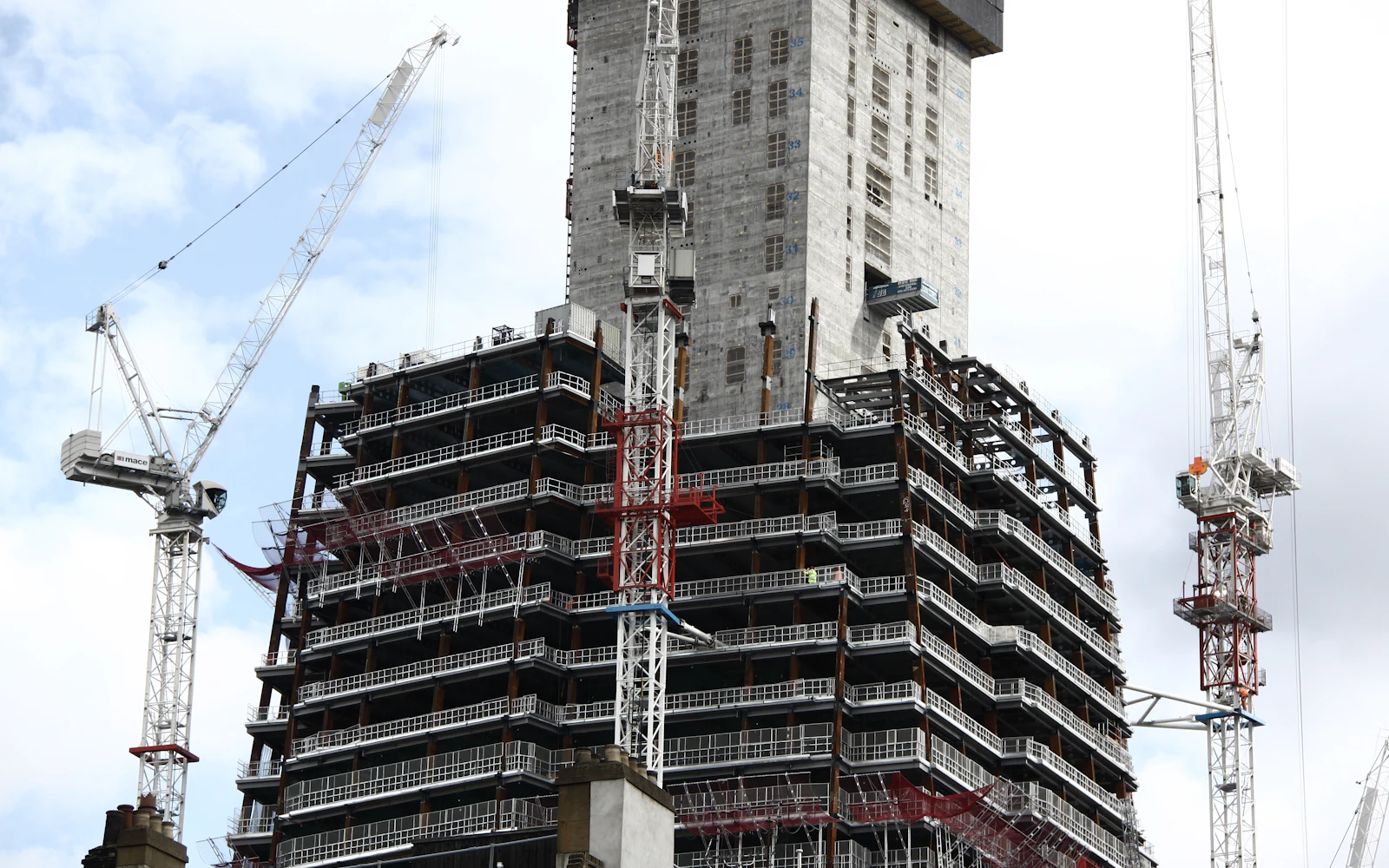
Gateway 2 Fire Strategy
For blocks of flats and care buildings 18 metres or 7 storeys and over, the strategy goes to the Building Safety Regulator before a spade goes in the ground.
Gateway 2 in three lines
- Statutory basis
- The Building (Higher-Risk Buildings Procedures) (England) Regulations 2023, made under the Building Safety Act 2022. Source: SI 2023/909, legislation.gov.uk
- Point in the project
- Once, before any building work starts on site. The regulator has 12 weeks to decide on a new higher-risk building and 8 weeks for work to an existing one. Source: Building control approval for higher-risk buildings, gov.uk
- Document produced
- A fire strategy that forms part of the application, and a decision from the Building Safety Regulator. Starting work without approval is a criminal offence. Source: Building control approval for higher-risk buildings, gov.uk
In brief
Gateway 2 is the regulator's check of the full design. The fire strategy is the part it reads most closely, and the part most often sent back. Expect to pay from £5,000, and to wait months, not weeks.
What the regulator looks for
Since October 2023, building work on a higher-risk building in England can't start until the Building Safety Regulator has approved a building control application. That application has to show how the finished building will meet every part of the Building Regulations, and for fire that means a full strategy, not an outline.
In practice the regulator wants to see that the engineer has dealt with the specific building, not a template. It checks the evacuation approach, the stair design, the firefighting shaft and lift, the external wall build-up, sprinkler coverage, smoke control in the corridors and the information the building's owner will be given at handover.
Approval rarely comes in one round. The regulator issues queries, the engineer answers them, and the drawings may change. A fee that covers only the first issue of the report can grow quickly.
What the engineer needs from you
- Plans, sections and elevations at a stage where the layout is settled (RIBA stage 4 at the latest)
- The height to the top occupied floor and the number of storeys, measured as the regulations require
- The planning fire statement, if the scheme had one, so the two documents agree
- The external wall specification and the product data for each layer
- The mechanical and electrical strategy for sprinklers, alarm, smoke control and the firefighting lift
- Who is principal designer and principal contractor, as the application names them
How long it really takes
The guidance gives the regulator 12 weeks to decide on a new higher-risk building. The regulator's own published figures for July to September 2026 put the median time to approval at 23 weeks, with 97% of decisions in that period being approvals. Plan the programme around the real figure, not the statutory one. Our Gateway 2 waiting times study tracks it release by release.
Fees for a Gateway 2 strategy
Our estimate from published UK fees puts a strategy for a higher-risk building at about £5,000 to £20,000 plus VAT, and more where the design is engineered with smoke or evacuation modelling. The number of query rounds and meetings with the regulator matters as much as the size of the building, so ask how many the fee includes. The cost page sets out the ranges and has a calculator.
After Gateway 2
Approval isn't the end of the engineer's work. Changes during the build go through change control, and at completion the client applies for a completion certificate at Gateway 3. The as-built strategy then goes to the building's accountable person with the rest of the fire safety information. That last step is on our Regulation 38 handover page.
Gateway 2 questions from design teams
What counts as a higher-risk building?
In England, a building at least 18 metres high or with at least 7 storeys that has two or more homes, or is a hospital or care home. The height is measured from ground level to the top of the highest occupied floor. The gov.uk guidance sets out the measuring rules.
Can a local authority approve the plans instead?
No. For a higher-risk building the Building Safety Regulator is the building control authority, and only it can approve the application. Local authority and registered approver teams can still help the design team prepare it.
Does work to an existing tall block need Gateway 2?
Yes, for building work covered by the Building Regulations, such as recladding or internal works to common parts. The regulator's statutory period for that is shorter, 8 weeks, but the published figures show median waits well beyond it.
What if the design changes after approval?
Changes go back to the regulator through the change control process in the application. Some major changes need approval before the work is done, so the strategy is often updated more than once during the build.
Quotes for a Gateway 2 strategy
Tell us where the site is. The engineer will ask for the height, the storeys and the drawings when they call.
We look for one fire engineer suited to the scheme. You'll know who they are before they hear anything about you, and there's no charge from us.
Worth having to hand: the address, the use, the number of storeys and whichever drawings you hold.
Enquiry received
- An engineer matched to the site and building type is emailed to you by name.
- Reply yes and your details go to them; reply no and the enquiry closes.
- The engineer calls, asks for the drawings and sends a written fee.